
Roofing Storm Damage: Assessment and Repair Guide
A Central Wisconsin guide to recognizing hail and wind damage, documenting roof conditions, handling urgent leaks, and planning repairs after a storm.
Published July 20, 2026 | Last updated 2026-08-20 | 11 min read
The short answer
Roofing storm damage can be obvious, such as missing shingles or a fallen limb, or subtle, such as bruised materials, loosened flashing, and small openings that allow water in later. When conditions are safe, document the storm date and visible damage from the ground, protect people and belongings from active leaks, and arrange a professional storm damage assessment before permanent repairs begin.
A careful assessment explains what the storm affected, which conditions need urgent attention, and whether a targeted storm damage repair can tie into sound materials or a broader replacement scope should be considered. A roofing contractor can inspect and document construction conditions, while the insurance carrier determines coverage under the policy.
What should a storm damage assessment include?
A storm damage assessment should combine safe ground-level observations with a professional roof inspection, photographs of visible damage, notes about leaks or interior staining, and a clear construction recommendation. The purpose is not simply to confirm that a storm occurred. It is to understand how wind, hail, rain, snow, ice, debris, and drainage affected the roof as a complete system.
The review should extend beyond the field of shingles or panels. Gutters, downspouts, fascia, soffits, siding, vents, skylights, chimneys, flashing, roof edges, penetrations, attic conditions, and interior water symptoms can reveal connected problems. A repair that addresses only the most visible mark may fail if an adjoining transition or drainage path is still allowing moisture into the building.

Common signs of roofing storm damage
The pattern depends on roof material, storm intensity, wind direction, age, and previous wear. Some warning signs can be seen from the yard; others require trained inspection and proper safety equipment. Do not climb onto a wet, icy, steep, or visibly damaged roof.
- Missing, lifted, torn, or creased shingles after high wind
- Heavy granule deposits in gutters or at downspout outlets
- Fresh dents on gutters, vents, flashing, or other soft metal
- Cracked, bruised, or punctured shingles and roofing materials
- Displaced ridge caps, flashing, sealant, or roof accessories
- Branches, debris, or impact marks on the roof and exterior
- New ceiling stains, attic moisture, dripping, or damp insulation
- Loose siding, trim, fascia, screens, or damaged window components
Why hail and wind damage need different repair strategies
Hail and wind stress a roof in different ways, so the repair plan should match the damage mechanism. Hail commonly creates impact damage. A shingle can remain in place even when the mat is bruised or protective granules have been displaced. Metal vents, gutters, and flashing may show fresh dents that help establish the storm's path, but a dent alone does not automatically mean the entire roof needs replacement.
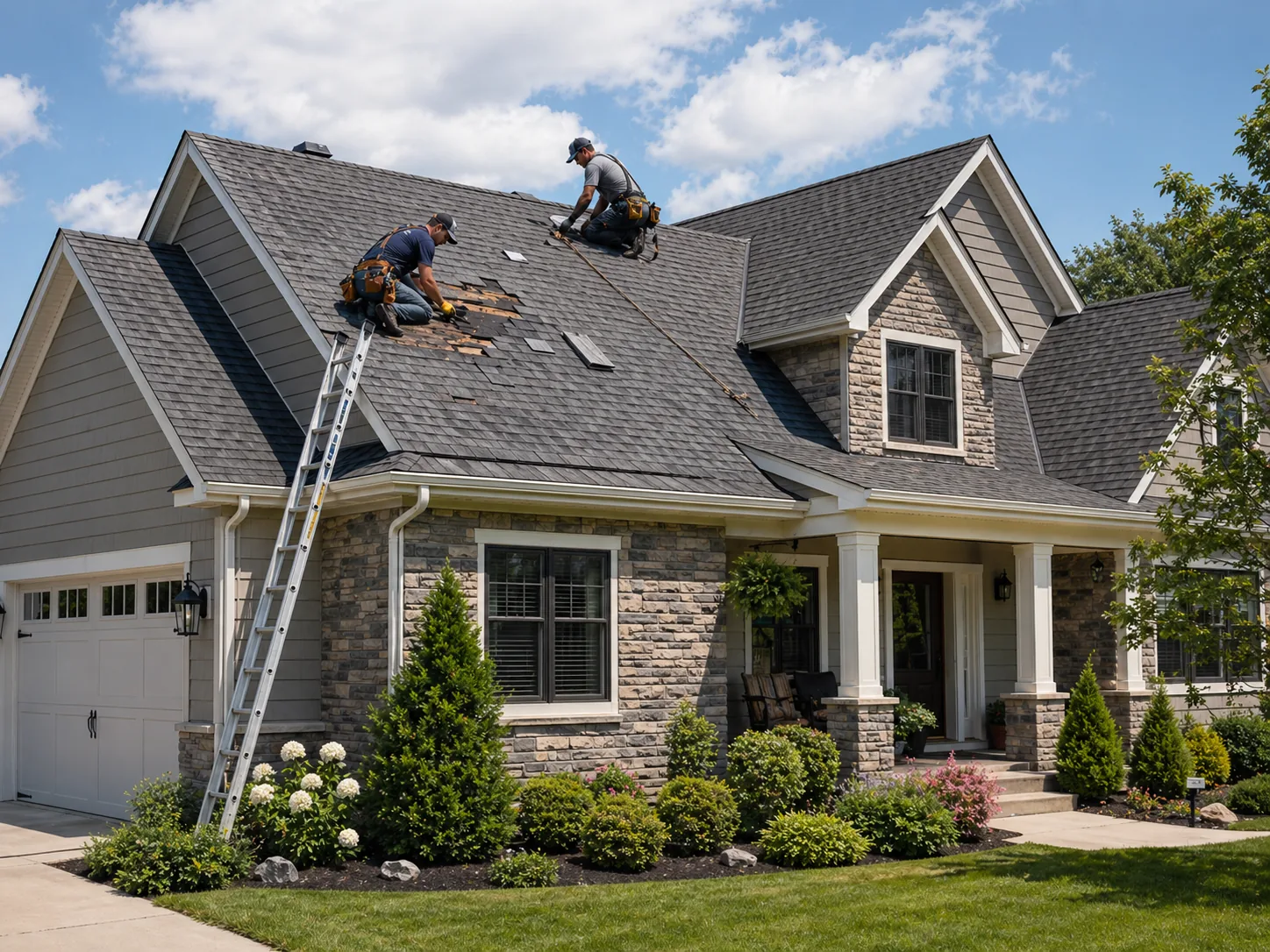
Wind damage repair focuses more on attachment and water resistance. Lifted shingles may not reseal correctly, creased tabs can lose strength, exposed fasteners can admit water, and displaced flashing or ridge caps can leave direct openings. Heavy rain can then exploit those weak points. An inspection should distinguish isolated damage that can be repaired from a pattern that affects the reliability of a larger roof area.
A practical roof inspection guide for homeowners
Homeowners can create a useful record without stepping onto the roof. Wait until the immediate storm has passed, then walk around the property from safe ground and photograph each elevation. Capture wide views that show the overall condition and closer views of visible debris, displaced materials, gutter dents, damaged siding, or water entry. If the attic is safely accessible, look for damp insulation, fresh staining, daylight, or moisture near valleys and penetrations.
Record the storm date and approximate time, when a leak or stain was first noticed, rooms or exterior areas affected, and any temporary measures taken. Keep original photographs and receipts together. This information helps the roofing contractor understand the sequence of events and gives the property owner a more organized starting point for repair planning and any roofing insurance claim conversation.
- Photograph rooflines and exterior surfaces from several safe angles
- Note hail, wind, falling branches, heavy rain, or nearby damage
- Check gutters, downspouts, siding, windows, and yard debris
- Protect belongings and contain drips without disturbing unsafe materials
- Request written inspection findings and construction photos
- Keep receipts for tarping, drying, cleanup, and other temporary work
When are emergency roofing services necessary?
Emergency roofing services may be needed when there is active water entry, exposed decking, a missing roof section, an unstable limb, displaced material that could fall, or another condition likely to worsen before normal repairs can be scheduled. The first objective is mitigation: reduce immediate exposure and make the occupied areas safer until the roof can be fully assessed.
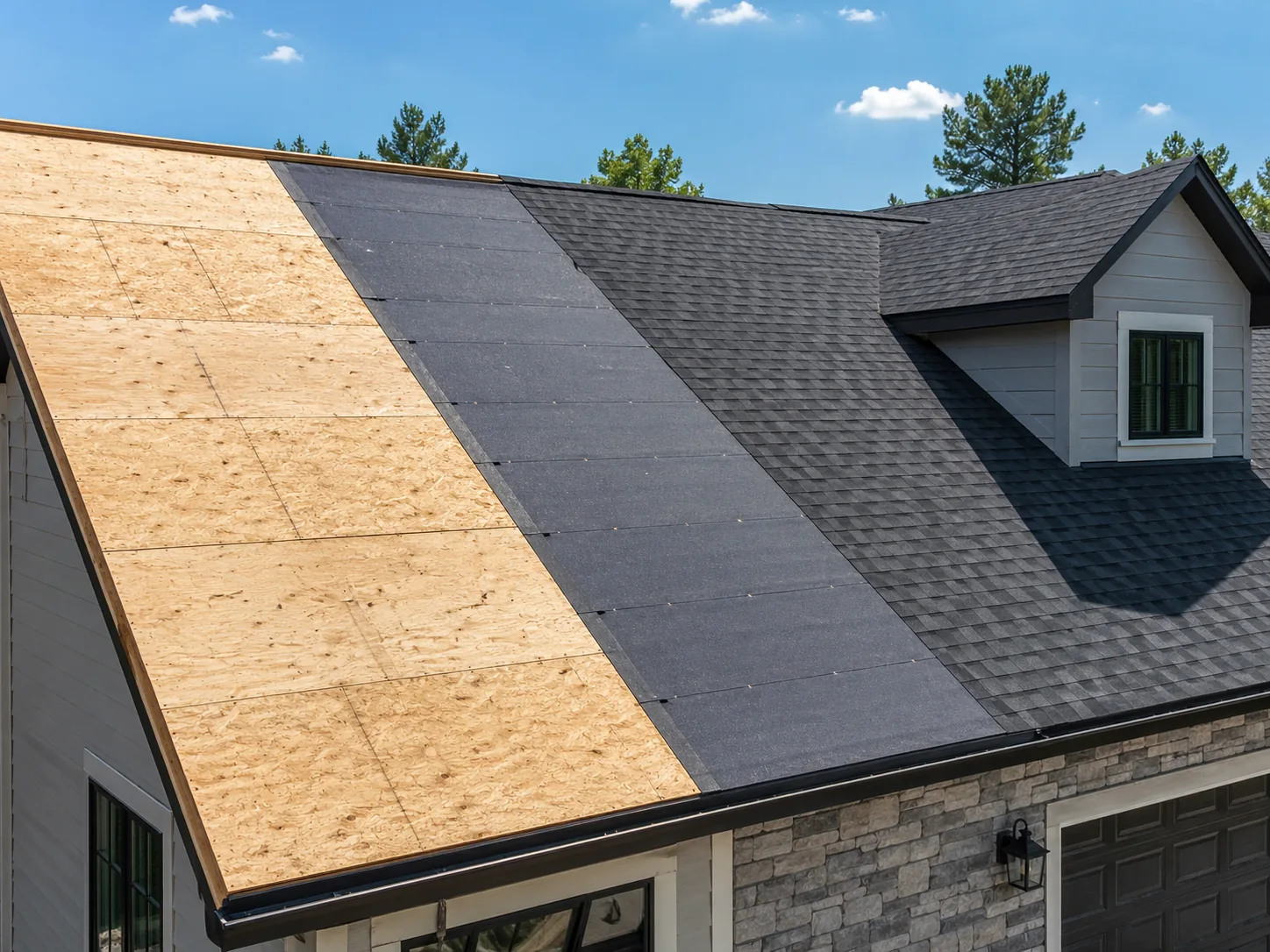
Temporary work may include tarping an opening, securing a small exposed area, or arranging safe debris removal. These measures do not restore the complete roof system and should not be mistaken for permanent storm damage roofing repair. Sagging ceilings, electrical hazards, soaked insulation, structural movement, and water near fixtures require particular caution; keep people away and contact appropriate emergency professionals.
Working with insurance after storm damage
Roofing insurance claims can be confusing because repair urgency, construction documentation, policy terms, and carrier decisions happen in parallel. Notify the insurance agent or company promptly when you intend to report a loss, preserve photographs before cleanup, keep receipts, and follow the carrier's instructions. The Wisconsin Office of the Commissioner of Insurance also advises consumers not to discard damaged property without the adjuster's agreement.
Homeowners often look for roofing companies that work with insurance claims because those contractors understand how to organize roof photos, measurements, condition notes, and a written repair scope. That experience does not give a contractor authority to approve coverage or negotiate the claim. In Wisconsin, contractors may discuss damage and costs with an insurer only with the customer's permission; the carrier remains responsible for policy and coverage decisions.
When comparing a storm damage roofing company, insurance documentation experience is useful but should not replace construction qualifications, communication, a complete written estimate, site-protection planning, and clear warranty terms. Be cautious with anyone who guarantees a claim result or offers to absorb part of the deductible. Ask the contractor to explain its construction findings and direct policy questions to the carrier or a qualified insurance professional.
- Save photographs and videos before cleanup or permanent repair
- Keep storm-related receipts, contracts, estimates, and correspondence
- Record when damage or leaking was first observed
- Request written inspection notes and a detailed construction scope
- Review the deductible and policy responsibilities with the carrier
- Ask questions before signing a repair agreement
Central Wisconsin conditions shape the inspection
A useful inspection reflects local weather and building conditions. Central Wisconsin properties can experience hail, straight-line wind, snow loading, ice, heavy rain, rapid temperature changes, and repeated freeze-thaw cycles. Those conditions affect asphalt shingles, metal roofing, low-slope areas, flashing, sealants, gutters, siding, and the transitions where different exterior systems meet.
Local context does not replace property-specific evidence. Two homes in the same storm can show different results because roof age, material, slope, exposure, nearby trees, maintenance history, previous repairs, and installation details differ. The contractor should explain what is visible on this property instead of relying only on storm reports or damage found at a neighboring home.
Roof maintenance tips that reduce avoidable storm risk
No maintenance plan can make a roof storm-proof, but regular attention can prevent ordinary wear from becoming an easy path for water. Keep gutters and downspouts moving water away from the roof edge and foundation. Trim hazardous overhanging limbs using qualified help, replace missing materials, and address loose flashing or aged sealant before severe weather exposes the weak point.
Periodic professional inspection can identify vulnerable penetrations, soft or deteriorated decking, drainage trouble, ventilation concerns, and previous repairs that are no longer performing. After a major storm, a new inspection provides a current condition record. Between storms, maintenance can help turn a developing problem into a manageable repair instead of an urgent interior leak.
Choosing the right storm damage repair partner
The right contractor should be responsive, specific, and willing to explain the reason behind each recommendation. Storm damage repair is not only about replacing the most visible material; it is about restoring the roof's ability to shed water, resist wind, drain correctly, and connect reliably at flashing, penetrations, ridges, valleys, and roof edges.
Ask whether the inspection includes photographs, how the contractor distinguishes storm effects from age-related wear, whether temporary protection is available, and how the proposed scope handles decking, flashing, ventilation, cleanup, and code-related details. Confirm insurance, written contract terms, start and completion expectations, payment schedule, and workmanship or manufacturer warranty information before authorizing work.
- What damage did the inspection identify, and where is it documented?
- Which conditions need immediate protection and which can wait?
- Can a repair connect reliably to the surrounding roof materials?
- What could change after existing roofing is removed?
- How will landscaping, siding, gutters, and occupied areas be protected?
- What cleanup, final review, and warranty documents are included?
The next step after roofing storm damage
A thorough assessment turns uncertainty into a documented plan. Start with safe observations, preserve evidence, address urgent exposure, and use a professional inspection to understand hail, wind, water, and connected exterior conditions. Then compare the recommended construction scope with the roof's age, material, repairability, and long-term needs.
Whether the practical next step is temporary protection, a targeted repair, replacement planning, or insurance documentation, avoid conclusions based only on a storm report or a quick ground-level glance. The most reliable decision begins with the actual condition of the roof and a clear explanation of the work required to protect the property.
Need a roof inspection?
Wisco Roofing & Exteriors can inspect the roof, explain what we see, and recommend a practical next step for your property.
Explore storm damage roofing services