Step 1
Review the existing condition
Inspect the property details that affect gutter guards, document visible concerns, and clarify the result you need.

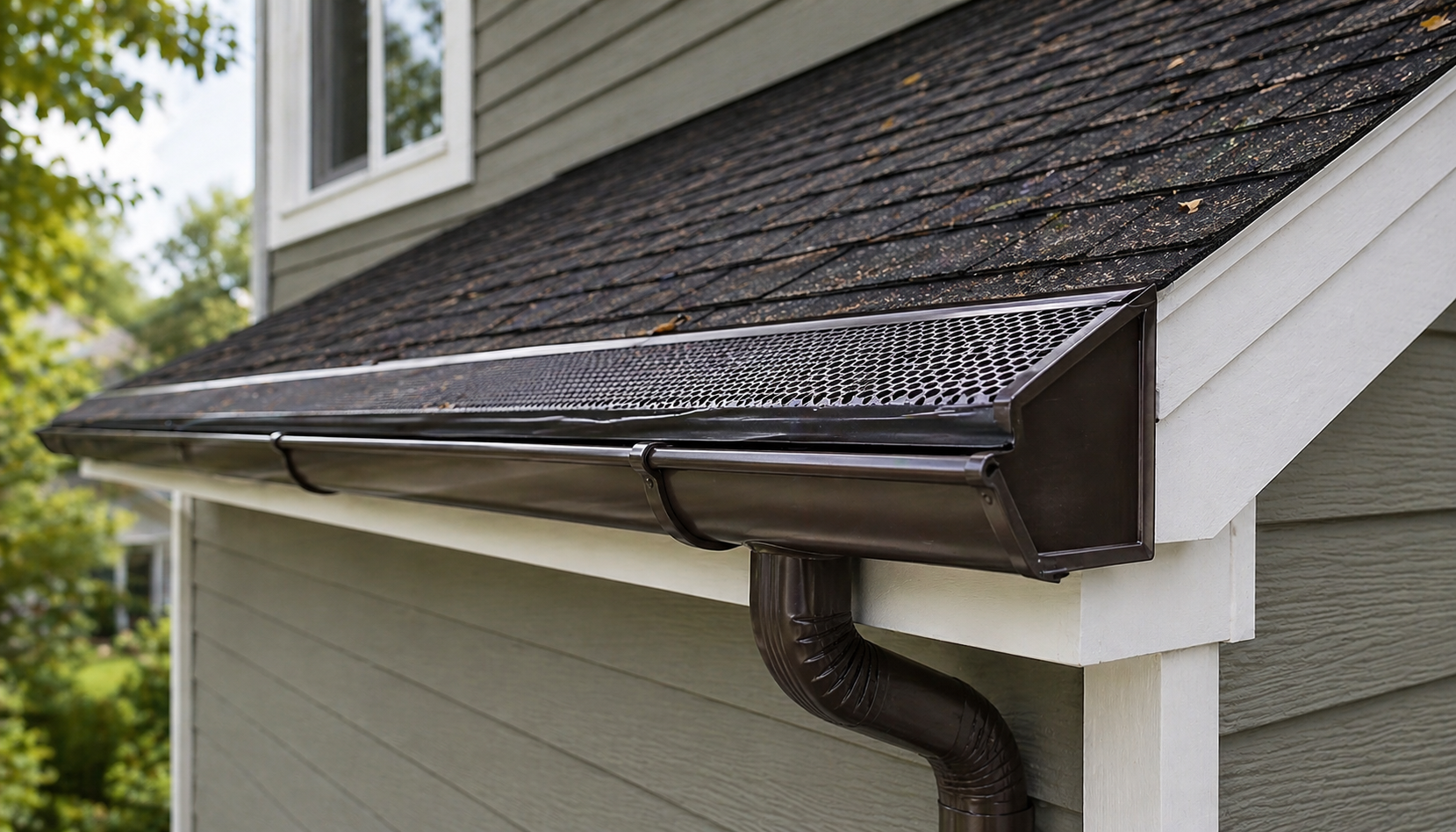
Gutter guard systems that help limit debris buildup and keep water moving through the system.
Clear guidance and a no-pressure estimate
The type and amount of debris common around the property.
Compatibility with the gutter profile, roof edge, and water flow pattern.
Whether repair, replacement, or downspout changes should happen before guards are added.
Service areas
Choose your city for local gutter guards guidance, including project considerations and service availability.
Gutter guards can reduce the leaves, needles, and roof grit that settle inside a gutter, making seasonal upkeep easier and helping water reach the downspouts more consistently. They are most useful when paired with gutters that already have sound slope, secure attachment, and working outlets.
Guards are not a substitute for correcting an undersized, sagging, or poorly routed system. We assess the roof edge and drainage pattern first, then recommend a guard approach that fits the existing or planned gutter profile.
Visible wear, damage, leaks, poor operation, or recurring maintenance concerns affect the gutter guards area.
You need to compare a targeted correction with a broader gutters replacement or upgrade.
The work needs to coordinate with another roofing or exterior project so transitions are handled in the right order.
Step 1
Inspect the property details that affect gutter guards, document visible concerns, and clarify the result you need.
Step 2
Compare practical gutter guards options, related repairs, materials, sequencing, and finish expectations.
Step 3
Protect the site, complete the approved scope, clean the work area, and review the finished details.
Review completed-project photos and customer feedback before planning your next step.
Schedule a free roof inspection today. We'll call you back within 2 hours to set up a time that works for you.
Save thousands on your project